A little about me
I’ve always been interested in people—what shapes us, what gets in our way, and why sometimes the things we know we should do are so much harder to actually do.
My path to becoming a therapist wasn’t entirely straightforward. I’ve worked in education, psychology, and learning, and I’ve spent years alongside children, adolescents, parents, and families. I’m also a mom of four, a former Division I athlete, and someone who has experienced plenty of my own seasons of figuring things out.
Those experiences have shaped the way I work. I don’t see people as a collection of symptoms or problems to be fixed. I see people as whole, complicated, capable human beings who are often doing the best they can with what they’ve learned, what they’ve experienced, and what they have available to them in a particular season of life.
And sometimes, what we need isn’t another person telling us what to do. We need someone willing to sit with us, get curious, ask a different question, and help us see something we may not have been able to see on our own.
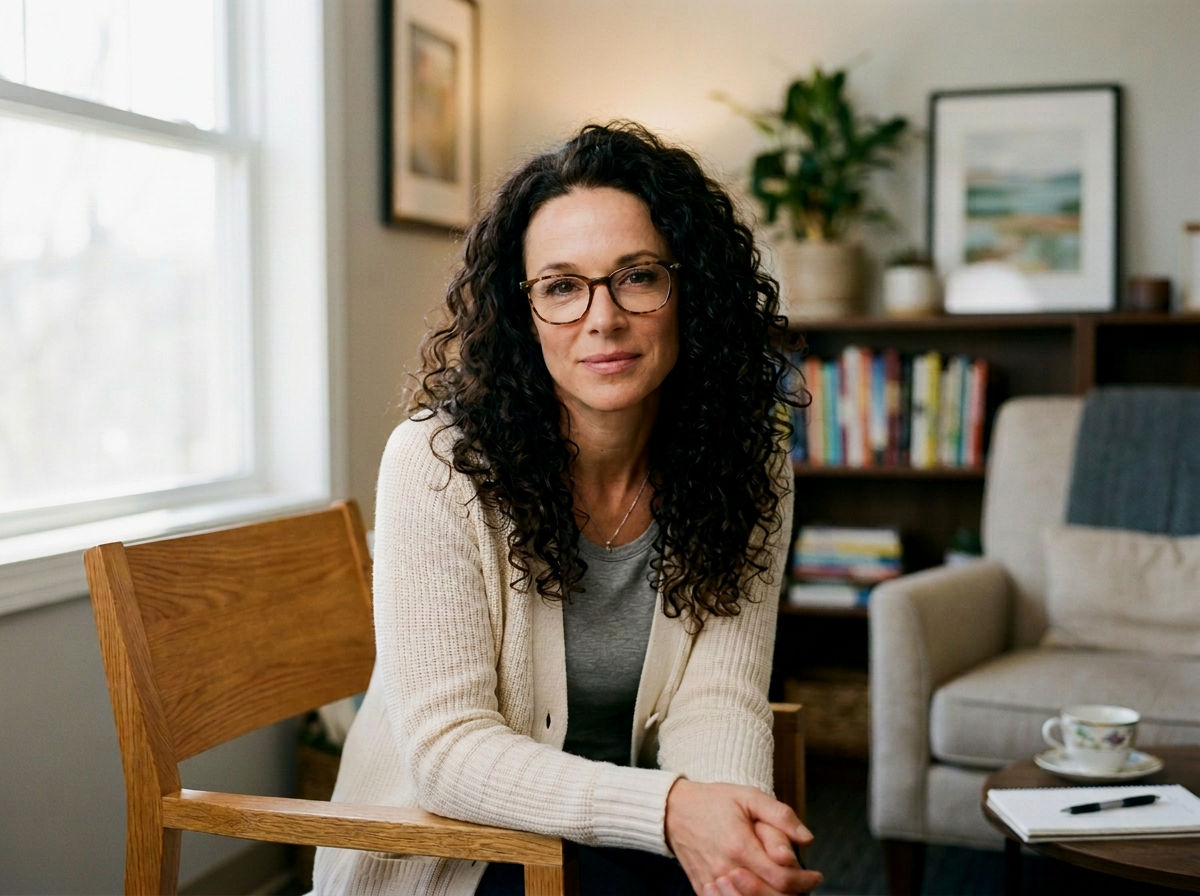
How I work
In therapy, I work with people who want to better understand themselves, their relationships, and the patterns that may be keeping them stuck.
Sometimes that means looking back and making sense of where something began. Sometimes it means navigating what is happening right now. And sometimes it means figuring out who you are becoming when an old version of yourself no longer quite fits.
My approach is supportive and relational, but I also believe therapy should be useful. We may talk, reflect, challenge an old way of thinking, connect the dots, or try something between sessions. My hope is that you leave not only feeling heard, but with a little more understanding of yourself and a clearer sense of what you want to do with that understanding.
I don’t believe there is one right way to do the work. Therapy should meet you where you are and help you move toward where you want to be.
And where Beautifully Unfinished came from
I didn’t set out to become a therapist who writes workbooks or shares reflections on Instagram. Those things grew naturally from the work I do with people and from noticing how often the questions we begin exploring in a session continue long after the hour is over.
The workbooks and resources I create are an extension of that work. They offer another way to slow down, reflect, and explore some of the same ideas at your own pace.
Maybe you’re already in therapy and want something to continue working through between sessions. Maybe therapy isn’t the right step for you right now. Or maybe you simply came across a question that made you stop and think.
Instagram has become another small extension of this work—a place to share some of the observations, questions, and ideas that come up again and again in the therapy room.
Beautifully Unfinished is where all of these pieces come together: the clinical work, the reflections, and the resources that have grown from it.
Because none of us are really finished figuring ourselves out.
And maybe we don’t need to be.